flexLayout - flex 布局
flexLayout 使用 CSS 的 Flexbox 模型 排列内部子组件。
XML 元素 |
|
|---|---|
Java 类 |
|
基本用法
这个示例展示了 flexDirection、alignItems、justifyContent 和 flexWrap 如何控制子组件的排列。flexLayout 没有预定义的宽度或高度。
<flexLayout alignItems="CENTER" flexDirection="ROW"
            justifyContent="CENTER" flexWrap="WRAP"
            classNames="flex-with-gap">
    <span text="Span"/>
    <textField placeholder="TextField"/>
    <button text="Button"/>
    <button text="Button"/>
</flexLayout>
内容对齐
contentAlignment 属性对应于 CSS 的 align-content 属性。该属性控制 flex 容器内子组件在有剩余空间时,交叉轴 方向上的对齐方式。与 主轴 的属性 justify-content 类似,该属性设置 主轴 方向子组件的对齐方式。
该属性仅影响 多行 flex 容器,即 flex-wrap 设置为 wrap 或 wrap-reverse 的容器。单行 flex 容器(即,flex-wrap: no-wrap 时)不受该属性影响。
|
START
内部元素位于容器的起始位置。
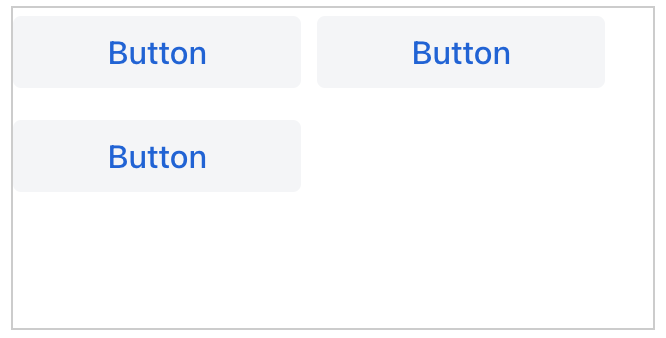
XML 代码
<flexLayout contentAlignment="START"
            css="gap: 0.5em; border: 1px solid #ccc;"
            width="20em"
            minHeight="10em"
            flexWrap="WRAP">
    <button text="Button" width="9em"/>
    <button text="Button" width="9em"/>
    <button text="Button" width="9em"/>
</flexLayout>
CENTER
内部元素位于容器的中心位置。
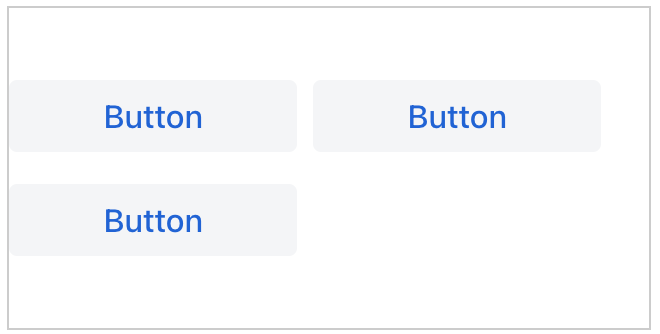
XML 代码
<flexLayout contentAlignment="CENTER"
            css="gap: 0.5em; border: 1px solid #ccc;"
            width="20em"
            minHeight="10em"
            flexWrap="WRAP">
    <button text="Button" width="9em"/>
    <button text="Button" width="9em"/>
    <button text="Button" width="9em"/>
</flexLayout>
END
内部元素位于容器的末端位置。
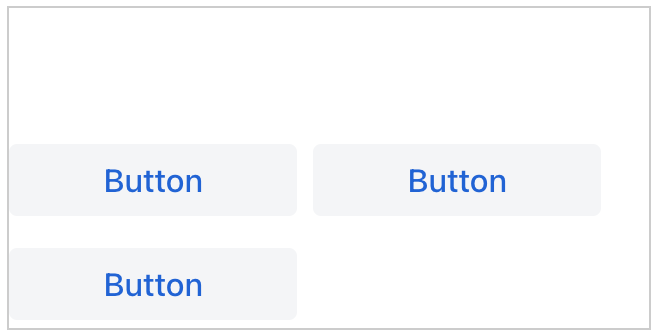
XML 代码
<flexLayout contentAlignment="END"
            css="gap: 0.5em; border: 1px solid #ccc;"
            width="20em"
            minHeight="10em"
            flexWrap="WRAP">
    <button text="Button" width="9em"/>
    <button text="Button" width="9em"/>
    <button text="Button" width="9em"/>
</flexLayout>
STRETCH
内部元素拉伸以填充容器交叉轴方向的空间。
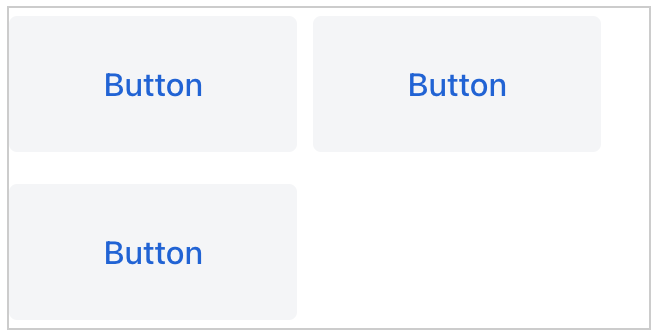
XML 代码
<flexLayout contentAlignment="STRETCH"
            css="gap: 0.5em; border: 1px solid #ccc;"
            width="20em" minHeight="10em"
            flexWrap="WRAP">
    <button text="Button" width="9em" height="AUTO"/>
    <button text="Button" width="9em" height="AUTO"/>
    <button text="Button" width="9em" height="AUTO"/>
</flexLayout>
SPACE_BETWEEN
内部元素在容器内均匀分布。第一个元素与容器开始对齐,最后一个与容器末端对齐。
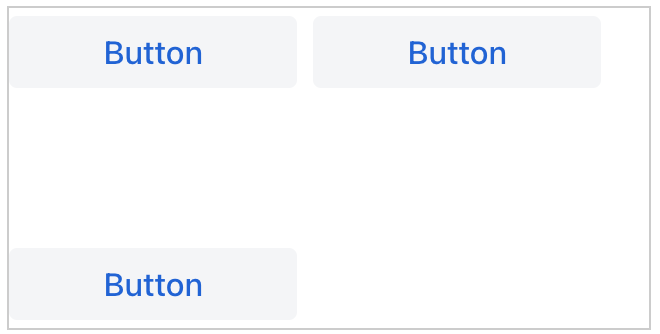
XML 代码
<flexLayout contentAlignment="SPACE_BETWEEN"
            css="gap: 0.5em; border: 1px solid #ccc;"
            width="20em" minHeight="10em"
            flexWrap="WRAP">
    <button text="Button" width="9em"/>
    <button text="Button" width="9em"/>
    <button text="Button" width="9em"/>
</flexLayout>
SPACE_AROUND
内部元素在容器内均匀分布。第一个和最后一个元素的两边都有一半宽度的空间。
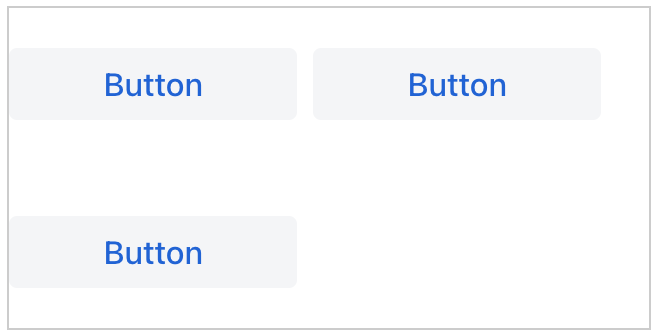
XML 代码
<flexLayout contentAlignment="SPACE_AROUND"
            css="gap: 0.5em; border: 1px solid #ccc;"
            width="20em" minHeight="10em"
            flexWrap="WRAP">
    <button text="Button" width="9em"/>
    <button text="Button" width="9em"/>
    <button text="Button" width="9em"/>
</flexLayout>
单元素延展
将 expand 设置为子组件的 ID,即,为组件设置 flex-grow: 1,使其能够沿主轴占据剩余空间。
<flexLayout id="flexLayout"
            flexDirection="COLUMN"
            expand="button"
            height="100%"
            width="100%">
    <button text="Button"/>
    <button id="button" text="Button"/>
    <button text="Button"/>
</flexLayout>
主轴方向
flexDirection 属性对应于 CSS 的 flex-direction 属性。该属性设置 flex 容器内的元素的排列方式,确定主轴和方向(正序或倒序)。
ROW
内部元素水平排列成一行。
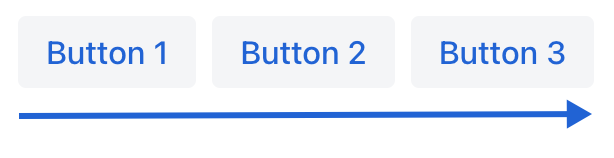
XML 代码
<flexLayout flexDirection="ROW"
            css="gap: 0.5em">
    <button text="Button 1"/>
    <button text="Button 2"/>
    <button text="Button 3"/>
</flexLayout>
ROW_REVERSE
内部元素水平排列成一行,但是为倒序排列。
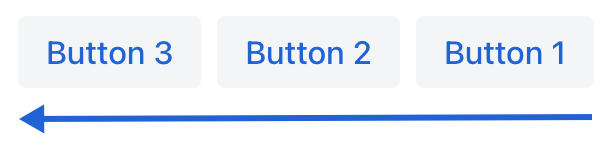
XML 代码
<flexLayout flexDirection="ROW_REVERSE"
            css="gap: 0.5em">
    <button text="Button 1"/>
    <button text="Button 2"/>
    <button text="Button 3"/>
</flexLayout>
COLUMN
内部元素垂直排列为一列。
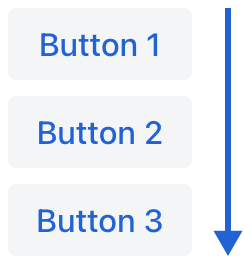
XML 代码
<flexLayout flexDirection="COLUMN">
    <button text="Button 1"/>
    <button text="Button 2"/>
    <button text="Button 3"/>
</flexLayout>
COLUMN_REVERSE
内部元素垂直排列为一列,但是以倒序排列。
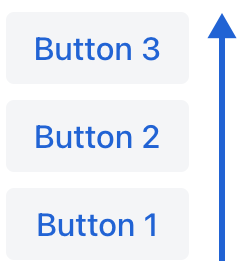
XML 代码
<flexLayout flexDirection="COLUMN_REVERSE">
    <button text="Button 1"/>
    <button text="Button 2"/>
    <button text="Button 3"/>
</flexLayout>
内容换行
flexWrap 属性对应于 CSS 的 flex-wrap 属性。确定内部元素是强制为单行还是可以换行至多行。如果允许换行,还可以设置内部元素的堆叠方向(正序或倒序)。
NOWRAP
内部元素强制单行排列,可能会溢出布局容器。

XML 代码
<flexLayout flexWrap="NOWRAP"
            css="gap: 0.5em; border: 1px solid #ccc;"
            width="20em">
    <button text="Button 1" width="9em"/>
    <button text="Button 2" width="9em"/>
    <button text="Button 3" width="9em"/>
</flexLayout>
WRAP
内部元素分为多行排列。
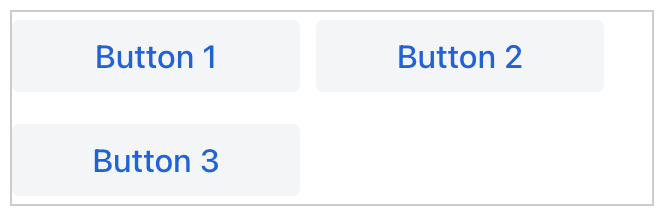
XML 代码
<flexLayout flexWrap="WRAP"
            css="gap: 0.5em; border: 1px solid #ccc;"
            width="20em">
    <button text="Button 1" width="9em"/>
    <button text="Button 2" width="9em"/>
    <button text="Button 3" width="9em"/>
</flexLayout>
WRAP_REVERSE
内部元素分为多行,以倒序排列。
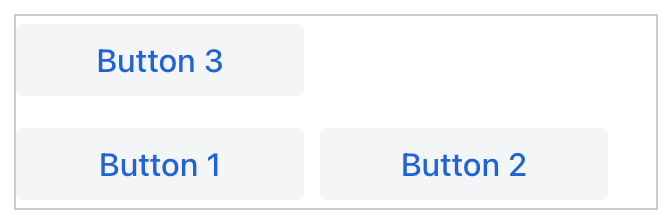
XML 代码
<flexLayout flexWrap="WRAP_REVERSE"
            css="gap: 0.5em; border: 1px solid #ccc;"
            width="20em">
    <button text="Button 1" width="9em"/>
    <button text="Button 2" width="9em"/>
    <button text="Button 3" width="9em"/>
</flexLayout>
内容排列
justifyContent 属性对应于 CSS 的 justify-content 属性。该属性控制在 flex 容器的主轴方向如何分配空间。
值 |
描述 |
|
内部元素位于容器的起始位置。 |
|
内部元素位于容器的中心位置。 |
|
内部元素位于容器的末端位置。 |
|
内部元素之间有空白,第一个元素位于主轴的起始位置,最后一个元素位于结束位置。 |
|
每个内部元素两侧的间隔相等,两端间隔减半。 |
|
每个内部元素两侧的间隔(以及边缘间隔)相等,平均分布。 |
使用示例,请访问 布局规则。
事件和处理器
通用事件和处理器 对所有组件都是一样的配置。
下面是 flexLayout 的特殊事件和处理器:
| 名称 | 描述 |
|---|---|
当用户点击布局时触发标题为 |
|
当用户在短时间内点击组件两次时触发标题为 |
|
当用户在单击组件一小段时间后会(确保不是双击)触发标题为 |